.webp)
.webp)

San Diego Rainy-Season Backyard Protection Checklist
October 4, 2026
Protect your finished yard before San Diego’s winter storms by checking five areas before December. Clear drainage paths first, address damage before sealing surfaces, and turn off lighting power if you find electrical faults.
Your pre-rain checklist:
- French drains: Clear accessible openings and runoff routes; get pooling near the house checked.
- Artificial turf: Remove debris and look for low spots, loose edges, and slow drainage.
- Pavers: Check for uneven surfaces and missing joint material; fix drainage before resealing.
- Pergolas: Inspect wood, hardware, and post bases; repair damage before applying a finish.
- Low-voltage lighting: Test lights and controls on a dry evening; leave electrical repairs to a qualified professional.
After heavy rain, <u>inspect only when your yard is safe</u>. Photograph damage and recheck puddles 24 hours after rain stops. Give water near the house, erosion, and electrical faults priority - not another round of surface cleaning.
Start with drainage, then work through the remaining four checks.
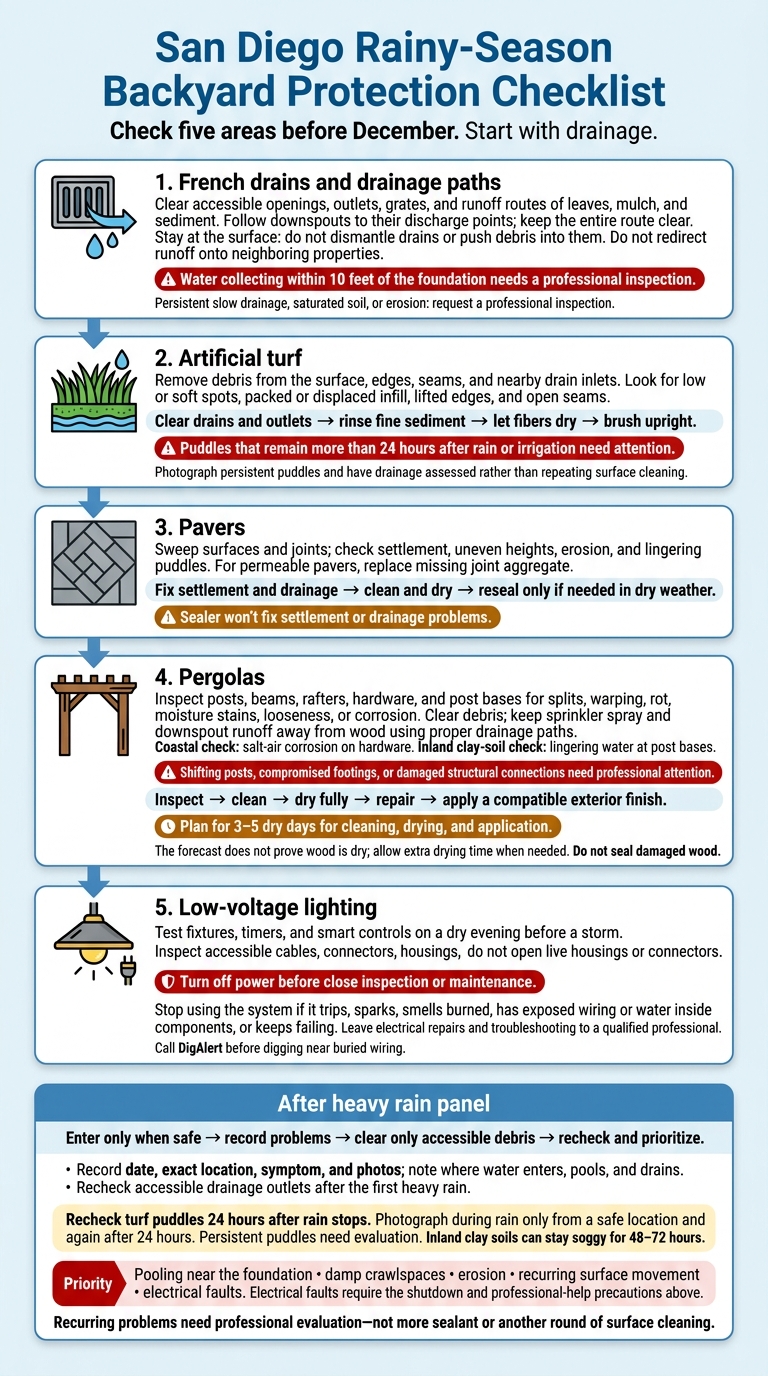
San Diego Rainy-Season Backyard Protection Checklist
1. Clear French Drains and Drainage Paths
Start with drainage. Remove leaves, mulch, and sediment from visible drain openings, outlets, grates, and covers so stormwater can leave your finished yard quickly. Stay at the surface - don’t dismantle the system or push debris into it.
Next, check how quickly water drains. Follow each downspout to its discharge point, whether that’s an on-site dry well, swale, infiltration area, or street curb. Keep the entire route clear, including low spots and fence lines. Don’t redirect runoff onto neighboring properties.
Check for roof runoff pooling beside the house. Water collecting within 10 feet of the foundation needs a professional inspection.
Watch for Standing Water, Slow Flow, and Erosion
Look for slow discharge at outlets, saturated soil, and erosion channels or gullies in bare soil. Pay extra attention near the house and along fence lines. Soil that stays saturated after a storm needs investigation.
If drainage stays slow or erosion continues after you remove debris, request a professional inspection. Check accessible outlets again after the first heavy rain.
If water still lingers after these checks, move to the turf drainage check next.
sbb-itb-2b3b7d5
2. Check Artificial Turf Drainage
If drainage is still slow after you clear the French drain paths, check the turf surface next.
Use a blower or broom to remove leaves, dirt, and debris from the surface, edges, seams, and nearby drain inlets. Look for flattened fibers, packed or displaced infill, soft spots or depressions, lifted edges, and open seams.
Rinse away fine sediment only after the drains and outlets are clear. Once the fibers dry, brush them upright.
Check for Puddles That Do Not Drain
Brief surface dampness is normal. But puddles that remain more than 24 hours after rain or irrigation need attention, along with recurring soggy patches or slow drainage. Note where water collects during regular irrigation. Those spots may cause problems during heavier rain.
Photograph each problem area during rain and again after 24 hours. If puddles remain, move beyond surface cleaning and have the drainage assessed for repairs. Include the photos when requesting a turf drainage assessment.
3. Inspect Paver Surfaces and Joints
If drainage seems slow, move from softscape to hardscape and check the pavers.
Sweep the pavers and joints. Then look for settlement, uneven heights, erosion channels, and areas where runoff doesn’t flow well. Puddles that linger after rain need prompt attention.
Check the joint material, too. For permeable pavers, replace any missing joint aggregate to maintain drainage.
Reseal Only When Needed and Weather Allows
Watch for worn, cloudy, or peeling sealer, or water that no longer beads on the surface. Reseal only when the surface shows wear and the weather is dry. Sealer won’t fix settlement or drainage problems, so address those issues first.
Seal only clean, dry pavers that are in good condition. Schedule paver inspection, joint repair, and surface prep before sealing.
After checking the hardscape, move to the pergola’s wood and hardware.
4. Inspect Pergola Wood and Connections
Check your pergola for water damage and loose connections. Inspect posts, beams, and rafters for splits, warping, rot, and moisture stains. Look for loose or corroded hardware, plus water trapped around brackets and post bases. Shifting posts, compromised footings, or damaged structural connections need professional attention.
Clear leaves and debris from connections and post bases. Adjust sprinklers so they don’t soak the wood, and direct downspout runoff away from the pergola along a proper drainage path.
Pay extra attention to hardware exposed to moisture. In coastal San Diego, check metal hardware for salt-air corrosion. In inland areas with clay soils, look for water that lingers at post bases after rain.
Move on to sealing only after the structure passes inspection.
Clean, Dry, and Repair Wood Before Sealing
Check the stain or sealant for peeling, cracking, and wear. Cedar and redwood still need periodic finish maintenance. Before applying a compatible exterior stain or sealant, clean the wood, let it dry fully, and complete any needed repairs. Do not seal damaged wood.
For wood repairs, connection checks, post-base concerns, and finish prep, see pergola services.
Plan for 3–5 dry days for cleaning, drying, and application. The forecast gives you a work window - it doesn’t prove the wood is dry. Allow extra drying time if coastal moisture or damp ground keeps the structure wet.
5. Test Low-Voltage Lighting Before Rain
Finish with the lighting system. Run the lights on a dry evening before a storm. Check every fixture for failed lights or flickering, and test timers and smart controls. Note any flickering, outages, or control failures without opening live housings or connectors.
Inspect accessible cables, connectors, housings, the transformer, and controls. Look for damaged insulation, cracked covers, exposed connections, and signs of water entry. Keep connections weather-resistant and away from pooling water, including spots left soggy by irrigation. If you spot damage, follow the safety steps below.
Turn Off Power and Refer Electrical Faults
Turn off power before close inspection or maintenance. Clear loose leaves from around fixtures without moving cables, connectors, or buried wiring. Call DigAlert before digging near buried wiring.
Stop using the system if it trips, sparks, smells burned, has exposed wiring or water inside components, or keeps failing. Leave connection repairs and troubleshooting to a qualified electrical professional.
Have a professional verify the required protection and inspect connections prone to moisture. For lighting inspections or repairs, use lighting and electrical services.
After Heavy Rain: Record Problems and Set Priorities
Return to the problem areas you checked before the storm. Inspect only when the yard is safe to enter. Look for slow drainage, new runoff channels, sediment deposits, shifted pavers, wet pergola posts, and failed lights or controls.
For each issue, record the date, exact location, symptom, and photos. Note where water enters, pools, and drains. Clear only accessible debris, then take another set of photos and record whether water flows better.
Recheck turf puddles 24 hours after the rain stops. Puddles that remain longer than 24 hours need evaluation, though inland clay soils can stay soggy for 48–72 hours.
Give pooling near the foundation, damp crawlspaces, erosion, and recurring surface movement first attention before the next major storm. Use your records to decide what to address first. If problems keep coming back, get a professional evaluation instead of adding more sealant or joint material, or cleaning the surface again.
FAQs
How can I tell if pooling comes from turf or clogged drains?
Check how long puddles linger after rain. Water that remains for more than 24 hours often points to poor drainage, but it doesn’t tell you what’s causing it.
Flat spots or reverse slopes can leave water pooling. Debris or sediment in drainage pipes can also keep water from reaching the outlet. Watch for dead or dying plants in low-lying areas, too - they can signal that the soil stays saturated for too long.
Do my permeable pavers need sealing?
Permeable pavers don’t need sealing. Their joints hold small aggregate stones that allow water to filter through the surface and into the ground. Sealing would block those gaps and prevent proper drainage.
Instead, keep up with regular maintenance. Have the joints professionally vacuum-swept to remove debris, and replenish the joint aggregate periodically to keep the system working properly.
How can I tell if pergola wood is dry enough to seal?
The provided search results don’t explain how to tell if your pergola wood is dry enough to seal. Contact United Turf & Pavers for professional care and maintenance advice suited to your pergola and local San Diego conditions.