.webp)
.webp)

Best Time to Schedule Grading & Drainage in San Diego
September 20, 2026
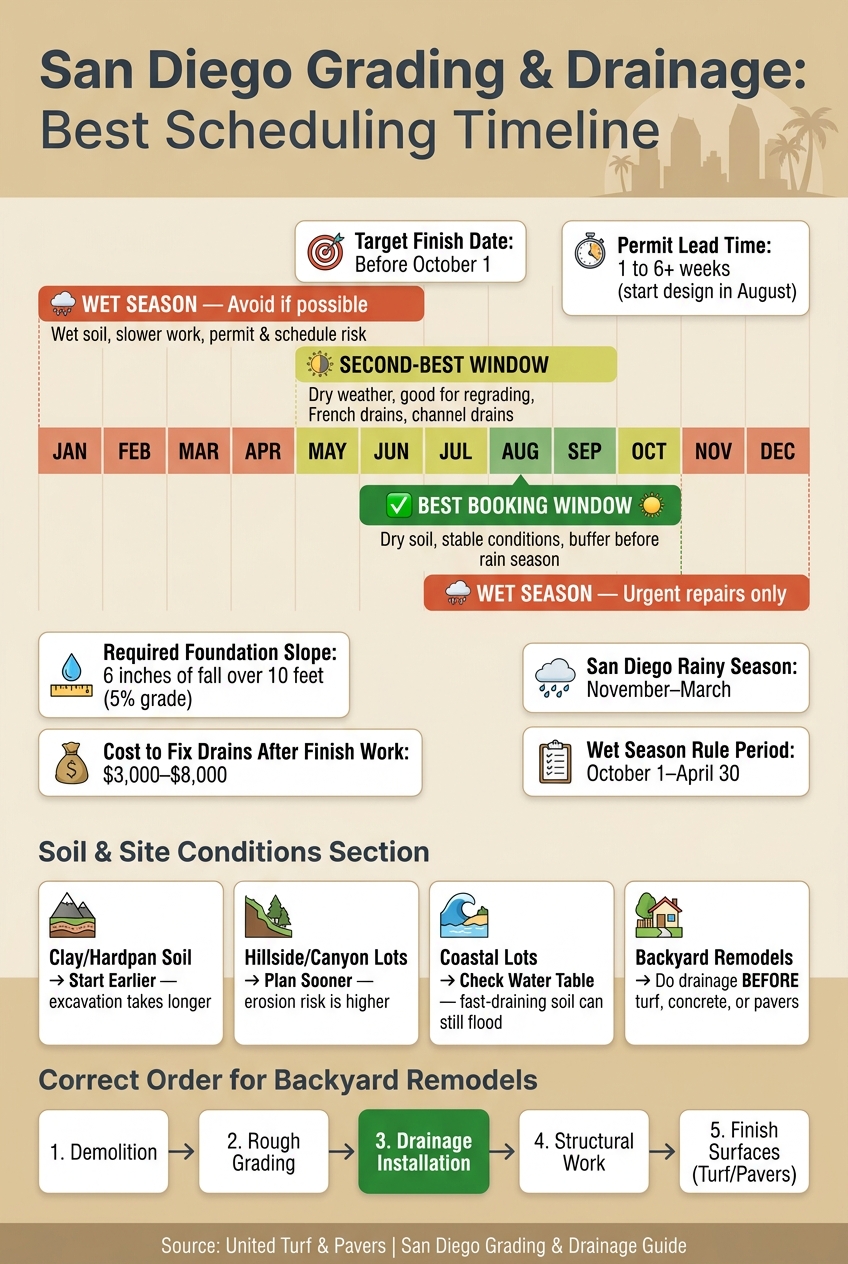
If you want grading and drainage work done before rain causes delays, book it by late summer and aim to finish before early October.
In San Diego, most rain falls between November and March, and many local stormwater rules treat October 1 to April 30 as the wet season. That means your safest window is usually August through October, with May through July as the next best option. If your job needs a curb tie-in or public storm drain connection, permits can take 1 to 6+ weeks, so waiting too long can push the work into storm season.
Here’s the short version:
- Best booking window: August to October
- Second-best window: May to July
- Worst time to wait: October to March
- Target finish date: Before October
- Typical permit delay: 1 to 6+ weeks
- Slope near the house: about 6 inches of fall over 10 feet
- Cost of fixing drains after finish work: often $3,000 to $8,000
Your timing should also match your yard:
- Clay or hardpan soil: start earlier because digging can take longer
- Hillside or canyon-edge lots: plan sooner because runoff and erosion are harder to control
- Coastal lots: fast-draining soil can still have high water table issues
- Backyard remodels: do grading and drainage before turf, concrete, or pavers
| Timing | What to Know | Best For |
|---|---|---|
| August to October | Dry soil, better scheduling buffer before rain | Most grading and drainage jobs |
| May to July | Dry weather, good backup window | Regrading, French drains, channel drains |
| October to March | Wet soil, slower work, more permit and schedule risk | Only urgent repairs |
If you see puddles near the foundation, soggy spots after watering, erosion lines, or water stains near walls, it’s time to plan the fix before winter. The rest of the article breaks down when to book, what site issues can slow the job, and how drainage should fit into a backyard remodel.
San Diego Grading & Drainage Scheduling Guide: Best Times to Book
Best Time to Schedule Grading and Drainage in San Diego
Try to wrap up grading and drainage work by early October. That gives you breathing room for permits, construction, punch-list fixes, and the kind of delays that always seem to show up right before San Diego’s rainy season.
Best Booking Window: August Through October
Late summer through early fall is usually the strongest time to get this work on the calendar. The soil is dry and more stable, so excavation and trenching tend to go faster and stay cleaner. Fall temperatures also help concrete cure well without the fast moisture loss that can happen in peak summer heat.
If your project needs a right-of-way (ROW) permit or a curb outlet tie-in, start the design process in August. That buffer can keep permitting from pushing the job into the first round of storms. It also gives you time for final site tweaks before wet weather shows up.
Second-Best Window: Late Spring Through Mid-Summer
If you miss that first window, May through July is the next best stretch, especially for regrading, French drain installation, or concrete channel work. The weather is usually dry and predictable, which makes it easier to move soil and pour concrete without rain getting in the way.
There is a catch. Inland areas often deal with more heat and tougher soil, which can slow excavation and call for deeper trenching than coastal sandy loam. That’s why more involved inland jobs should usually be booked earlier than simpler coastal regrades.
For more involved projects, start permit and planning work in winter or early spring so you can stay lined up for a May–July construction slot.
When Waiting Becomes a Problem: October Through March
Once the rainy season starts, grading or drainage work gets a lot harder to schedule well. San Diego’s clay soils can swell when wet and slow excavation. That can turn site access muddy and make progress much less predictable. If water is already pooling near a foundation or patio, the problem can also get worse while the job is still underway.
There’s also a legal side to this. Drains that connect to public storm systems need a ROW permit, and unpermitted work can lead to a red tag. Waiting until November or December can stall a project at exactly the wrong moment. Once the schedule is set, the next step is matching the drainage plan to the yard’s runoff and grade.
sbb-itb-2b3b7d5
How to Plan Grading and Drainage Before Rainy Season
Timing only helps if the plan is sound. Before you book anything, figure out where water sits and where it flows. Then match the fix to what’s happening in the yard, not what you assume is happening.
Check for Runoff, Low Spots, and Water Near Structures
Irrigation often shows drainage trouble before the first storm does. After a normal watering cycle, walk the yard and watch for spots that stay soggy after the rest of the lawn starts to dry. Those areas usually turn into trouble during the rainy season.
Pay close attention to signs like these:
- Puddles within 10 feet of the foundation, or staining beside walls, gates, or patio edges, and efflorescence on retaining walls - these point to the most urgent drainage risk.
- Erosion channels, gullies, or soil and mulch gathered downhill from a planting bed - this usually means the slope is off or runoff is not being controlled.
Soil next to the foundation should slope away at 5% for 10 feet, which equals 6 inches total. If it doesn’t, regrading should be part of the plan. A simple string-line test between two stakes set 10 feet apart can show whether the slope is close.
Take photos of every problem area, ideally during or right after a storm. That makes the site visit faster and gives the contractor a clearer read on the issue. Those signs also help sort out whether you need regrading, a surface drain, or subsurface drainage.
Choose the Right Drainage Solution for the Site
The right fix depends on what the yard is doing with water. If water is pooling on a patio or driveway, the issue is often grading or a surface drain. If soil stays wet for days and never seems to dry, that usually points to subsurface water movement and may call for a French drain.
The main idea is simple: match the fix to the cause, not just the wet spot.
| Solution | Best Use Case | Disruption Level |
|---|---|---|
| Surface Regrading | Correcting minor low spots and foundation pitch | Moderate (soil movement) |
| Swales | Redirecting surface water on large, flat lots | Moderate (landscaping/sod) |
| French Drains | Soggy soil, groundwater, or hillside seepage | High (deep trenching) |
| Subdrains / Underdrains | Behind retaining walls or under permeable pavers | High (structural integration) |
Clay soil drains slowly. Sandy coastal soil drains faster, but it can wash out more easily. If you’re dealing with heavy clay or hillside runoff, plan sooner. Those jobs often take more time because excavation and drain layout are more involved.
"A French drain without a proper outlet can trap water and worsen saturation."
If a drain connects to a public storm system or a curb outlet, it will usually need a ROW permit and sometimes an EMRA. That’s one more reason to get moving early.
Work Backward From the First Likely Storms
San Diego’s first major storms usually show up in November, so it makes sense to plan backward from there.
- Site visit and scope alignment
- Permit review
- Excavation and drain installation
- Final grading and surface work
Build your start date around permit time, not just build time. If the job needs a permit or curb connection, start the design phase in August and lock in construction time before November. The aim is to finish underground work before wet weather starts squeezing the schedule.
Site Conditions in San Diego That Can Change the Timeline
Some San Diego yards need an earlier start because soil, slope, and groundwater can drag out excavation and drainage work. In practice, these are the site issues that most often move a project up on the calendar.
Clay Soil, Hardpan, and Poor Water Absorption
In inland areas like Santee, El Cajon, Lakeside, and the East County foothills, expansive clay soils drain slowly once they get wet. Many San Diego mesas also have hardpan just a few inches below the surface. When that happens, water can't move down easily, so it shifts sideways toward foundations instead. To get to stable soil, crews often need to excavate 18–36 inches deep.
Dry-season excavation usually goes more smoothly on clay because the soil holds its shape better. There’s also a cost issue: clay spoil weighs more, so hauling and disposal can cost more. Put simply, clay and hardpan tend to slow excavation and are a common reason homeowners book earlier.
Soil can change one part of the schedule. Slope changes another.
Slopes, Canyon-Adjacent Lots, and Erosion Risk
Lots on hillsides or near canyon edges come with a different set of problems. On a slope, runoff gains speed fast, and if drainage isn’t set up the right way, that water can funnel straight toward the foundation. Behind retaining walls, trapped water adds pressure, which can shorten the life of the wall if drainage isn’t built in.
These jobs often need more than a basic drain. Depending on the site, the plan may also include:
- swales
- terracing
- retaining walls
- stabilization plantings
Those plantings also need time. They can take months to establish before they’re ready to help hold soil during a storm. For canyon-adjacent lots, it’s usually safer to start planning and paperwork in late winter or early spring, then aim for installation during the dry season before fall.
"The time to protect a canyon slope is the dry season before the storms." - SoCal Exterior Services
Water behavior shifts again near the coast.
Coastal vs. Inland Conditions
Coastal neighborhoods such as La Jolla, Del Mar, Ocean Beach, and Pacific Beach usually have sandy loam, which drains faster than inland clay. But that doesn’t mean those sites are simple. In places like Ocean Beach, Pacific Beach, and Coronado, high water tables during wet years can push moisture up through slabs. That often calls for perimeter drainage systems, not just surface-level fixes. Near the coast, metal drainage hardware also has to deal with salt-related corrosion over time, which affects material choice.
Inland yards run into the opposite problem. Dense clay can stay soggy for 48 to 72 hours after the rain ends. Then, after a long dry summer, the first fall rains may run off instead of soaking in.
Those site conditions also shape how grading needs to line up with turf, pavers, and other backyard work.
How Grading and Drainage Fit Into a Backyard Remodel
Once you know when to start, the next step is figuring out where drainage belongs in the remodel sequence.
Why Drainage Comes Before Turf, Pavers, and Outdoor Features
In a backyard remodel, drainage should be scheduled before turf, pavers, and other finish work.
A standard sequence looks like this: demolition, rough grading, drainage, structural work, then finish surfaces.
That order matters because slopes and drain outlet locations need to be set before any surface goes down. If the grade underneath is off, water won’t move evenly toward drain points. Instead, it can pool on patios, press against walls, or sit under turf.
And that’s where things get messy. If you try to fix drainage after the surface is finished, you usually have to cut into work that’s already done. That’s why the slope needs to be set during rough grading, before the finish surfaces go in.
Coordinating One Project Instead of Fixing Water Problems Later
This sequence matters most when drainage, turf, and hardscape are all being built at the same time.
The smart move is to plan grading, drainage, base prep, and finish elevations together. Contractors are often already excavating 3–4 inches of material for an artificial turf or paver base, which makes that stage the most cost-effective time to fix slope issues too.
Bundling the work means:
- one excavation phase
- a drainage system planned around the finished layout
- less demolition, less rework, and lower added cost later
If drainage gets added after installation, the fix usually becomes more expensive and more disruptive. Planning it early keeps the remodel cleaner, faster, and less expensive.
Conclusion: Book Early, Finish Before Winter, Protect Your Yard
Book grading and drainage between August and October so the job finishes before San Diego's November-to-March rains.
If you're planning a larger remodel, start design and permitting in late winter or early spring. Permit approvals can take 1 to 6+ weeks.
That schedule matters even more when grading and drainage are part of a backyard remodel. Handle grading and drainage after demolition and underground utilities, but before hardscape or turf. Get that order wrong, and the project can turn into an expensive do-over.
Waiting until the rainy season can slow excavation and concrete work. And if drains need to be added after pavers or concrete are already finished, demolition and restoration can add $3,000 to $8,000 to the job.
This is the sequencing the crews at United Turf & Pavers walk through on every backyard remodeling project before a shovel goes in the ground: slope, soil, and drainage get checked first, and hardscape and turf get scheduled around that timeline, not the other way around.
FAQs
How early should I book if permits are needed?
Plan your project several months before your target start date. Permit review can take several weeks or, in some areas, several months depending on where you live and how much work the project involves.
If the job needs Right-of-Way permits, the timeline may run anywhere from 1 to 6+ weeks. To cut the odds of delays, submit permit and HOA applications as early as you can. If both are required, send them in at the same time.
What drainage fix is best for my yard?
The right drainage fix comes down to where the water starts and how your yard is shaped.
- Area or channel drains work well for pooling water on patios or in low spots.
- French drains are a good fit for soggy areas or water coming up through the soil.
- Permeable pavers or dry wells can help in flat yards where water has nowhere to go.
- Regrading matters most when water is moving toward your home and putting your foundation at risk.
Can I do grading after pavers or turf?
No. Grading and drainage should be handled during base prep, before pavers or turf go in.
Fixing grading after the fact usually costs a lot more. In most cases, it means cutting into the finished pavers or turf, then rebuilding those areas once the slope and drainage are corrected.
Doing it right from the start helps you avoid that extra work and those added costs later.