.webp)
.webp)

Landscape Lighting for San Diego's Shorter Fall & Winter Evenings
September 30, 2026
For San Diego's earlier sunsets, light your paths and steps first, not the whole yard. When daylight saving time ends on November 1, 2026, sunset shifts to about 4:55 p.m.
Keep your lighting plan simple:
- Walking routes: Use shielded, low-glare lights to show steps, edges, and changes in ground level.
- Outdoor living areas: Add focused cooking lights, softer seating lights, and accents for 1 to 3 features.
- Fixtures and controls: Choose warm, wet-rated LEDs suited to coastal conditions, with separate zones and sunset scheduling built into your landscape lighting and electrical plan.
- Installation: Check permits, drainage and grading needs, and inspection requirements before running conduit. Set wiring and sleeves ahead of any hardscape work.
Start with an after-dark walk through your yard to spot hazards and glare before choosing fixture locations.
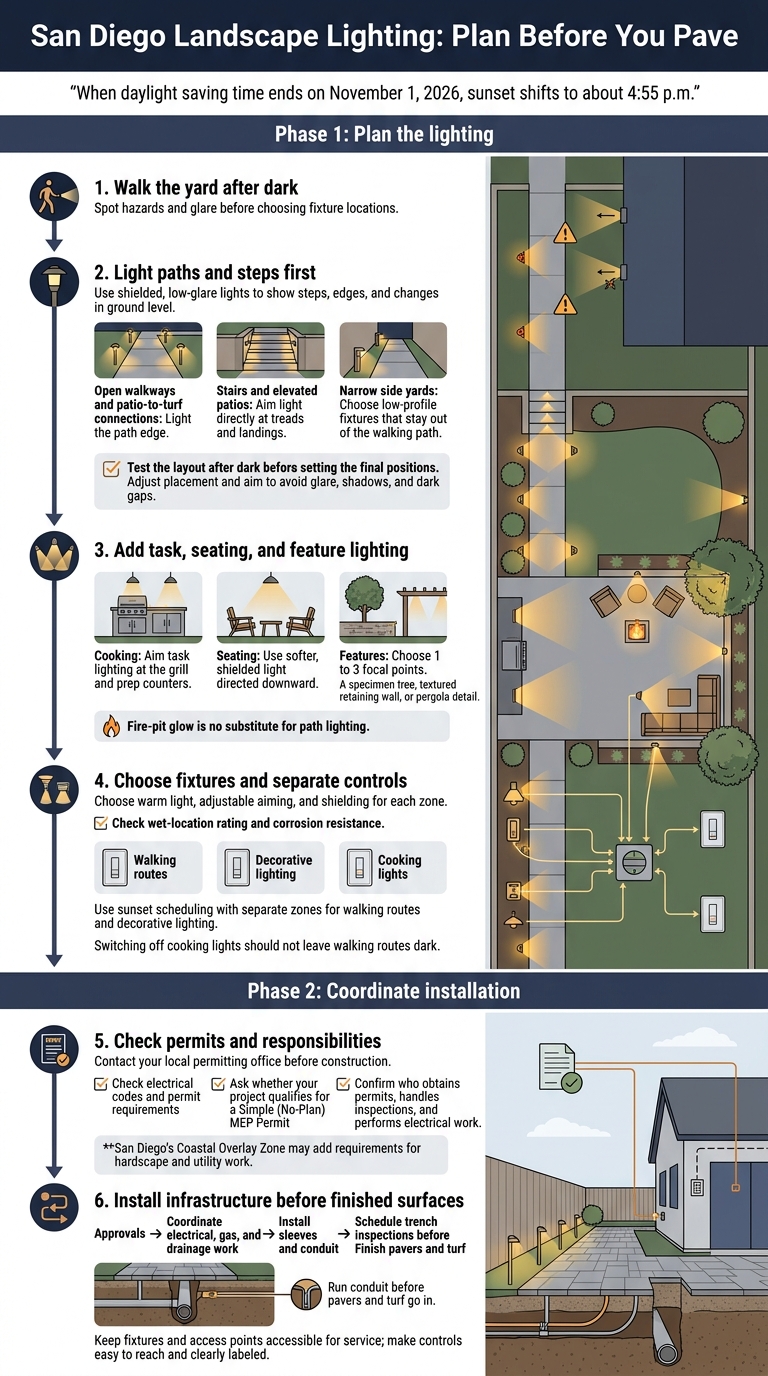
San Diego Landscape Lighting: Plan Before You Pave
Light Paths and Steps First
Once you’ve marked problem spots, light the routes you use most first: walkways, pool paths, elevated patios, and side yards. This first layer of after-dark lighting should make transitions between pavers, turf, concrete, and planting beds easy to see. Aim the light at the walking surface, not across the surrounding yard.
Choose Fixtures for Each Route
- Open walkways and patio-to-turf connections: Light the path edge.
- Stairs and elevated patios: Aim light directly at treads and landings.
- Narrow side yards: Choose low-profile fixtures that stay out of the walking path.
Test Placement and Glare After Dark
Space fixtures to avoid dark gaps along each route. Grading and retaining walls can affect where shadows fall on steps and paths, especially on sloped lots.
Test the layout after dark before setting the final positions. Adjust each fixture’s placement and aim so every tread, landing, and change in surface material is lit, without glare, shadows, or dark gaps.
sbb-itb-2b3b7d5
Layer Lighting for Outdoor Living Areas
Once paths are safe, light the places where people gather: patios, pergolas, outdoor kitchens, and fire pits. Earlier sunsets in fall and winter make lighting important for using these spaces. Plan for drainage so winter rain doesn’t pool around fixtures or connections.
Separate Cooking and Seating Lighting
Aim task lighting at the grill and prep counters so your body doesn’t cast shadows across the work surface. For dining areas, seating, and nearby turf edges, use softer, shielded light directed downward.
Fire-pit glow is no substitute for path lighting. It covers too small an area to reveal trip hazards.
Light 1 to 3 Backyard Features
Choose 1 to 3 focal points:
A specimen tree, textured retaining wall, or pergola detail.
Use discreet fixtures and aim beams only at those features, not toward nearby windows. Give each lighting type a clear job.
| Lighting type | Purpose | Suitable location | Main design risk |
|---|---|---|---|
| Path lighting | Light walking routes | Walkways and turf edges | Dark gaps or exposed glare |
| Uplighting | Highlight height | Trees and pergola posts | Spill toward windows or sky |
| Grazing | Reveal texture | Stone retaining walls | Hot spots and exaggerated imperfections |
| Wall washing | Create an even backdrop | Smooth walls and fences | Overlighting the yard |
| Task lighting | Light work surfaces | Grills and prep counters | Shadows or glare toward guests |
Choose Outdoor LEDs and Lighting Controls
Choose warm light, adjustable aiming, and shielding for each zone. Check the fixture’s wet-location rating and corrosion resistance; an “outdoor” label alone isn’t enough. Coastal yards need marine-grade 304 or 316 stainless steel to help resist salt air.
Once the fixture layout is set, choose a control for each zone.
| Control | Reliability: advantage and limitation | Seasonal adjustment | Installation complexity | Best layout fit |
|---|---|---|---|---|
| Timer | Simple to use; fixed times need attention | Manual changes as sunsets shift | Low | Small, single-zone patios |
| Photocell | Responds to darkness; dirt or shadows can affect it | Automatic dusk response | Low | Basic dusk-to-dawn lighting |
| App-based control | Flexible scenes; verify Wi-Fi needs | Automatic with sunset scheduling | Moderate | Multi-zone yards |
Use sunset scheduling with separate zones for walking routes and decorative lighting. Paths can light up as daylight fades, while feature lighting runs only when you want it. Keep cooking lights on separate controls so switching them off after dinner doesn’t leave the routes home dark.
Plan Installation Around Hardscape and Local Rules
Once the lighting plan is set, handle permits and installation before finishing hardscape and turf.
Check Electrical Codes and Permit Requirements
Contact your local permitting office before construction. New circuits and added electrical work still need permits, even if other parts of the project don’t. San Diego’s Coastal Overlay Zone may also add requirements for hardscape and utility work. Ask whether your project qualifies for a Simple (No-Plan) MEP Permit.
Install Wiring Before Pavers and Turf
Once approvals are in place, coordinate electrical, gas, and drainage work. Install sleeves and conduit before laying pavers and turf. Schedule trench inspections before backfilling.
Confirm Project Details
Get a written scope and an itemized written estimate. Confirm who will obtain permits, handle inspections, and perform the electrical work. Keep fixtures and access points accessible for service, and make sure controls are easy to reach and clearly labeled.
Conclusion: Keep Your Yard Usable After Dark
When fall and winter bring earlier sunsets, light paths, steps, and elevation changes first. Add task lighting where you cook and soft, shielded light where you sit.
Plan low-voltage LEDs and zone controls that adjust to earlier sunsets. Coordinate them with hardscape and electrical work before surfaces are finished.
Schedule a free design consultation with United Turf & Pavers to plan landscape lighting as part of your backyard remodel.
FAQs
How bright should my path lights be?
Aim for a soft, warm glow that makes walkway edges clear without harsh glare or hot spots. Path lighting should gently guide the way, not flood it with light.
For San Diego’s earlier sunsets in fall and winter, low-voltage LED lighting is the most effective choice for a safe, welcoming atmosphere. These systems give you precise control over the light, keeping paths visible and inviting without disturbing your outdoor space’s relaxed feel.
Can I add lighting without removing existing pavers?
Yes - you can often add landscape lighting without removing existing pavers. Wiring and transformer components can be installed with trenching where needed. Lighting sleeves or conduit runs let you position fixtures later.
Planning sleeves when the paver base is installed makes it easier to add fixtures with little disruption. Without them, you may need to lift and replace pavers in small areas along the trench path.
How do I maintain landscape lights near the coast?
Near San Diego’s coast, choose corrosion-resistant hardware rated for coastal use and weatherproof connections. Shield fixtures from salt spray where possible. Inspect and clean them periodically, checking for loose connections and spots where water could get in.
For any work, make sure the electrical rough-in is done properly and all connections are secure. If your project includes power for lighting, plan for the required electrical permits and hire a qualified contractor to handle the entire job.