


Outdoor Fireplaces in San Diego: Costs, Permits & Placement
November 4, 2026
Plan on $5,000–$15,000 for a prefab gas outdoor fireplace installation in San Diego, or $15,000–$40,000 or more for custom masonry. Before buying, confirm your permit requirements and ask for a written installed price that covers the full build.
Your plan should cover:
- Fireplace or fire pit: A fireplace directs heat toward facing seats; a fire pit allows seating around the flame.
- Gas or wood: Compare utility work and easy ignition with wood storage, smoke, sparks, and ash cleanup.
- Total cost: Check whether the quote includes the foundation, hearth, finishes, venting, utility connections, permits, and site repairs.
- Permits: Confirm building, gas, electrical, and structural requirements with your local building department. Check how long backyard permits take before you schedule. HOA approval is separate.
- Placement: Follow appliance clearances around the house, eaves, pergolas, furniture, and landscaping. Account for wind, drainage, and access.
Zone 0 is not a fireplace clearance rule. As of November 4, 2026, statewide rules have been approved but are not yet in effect statewide. San Diego’s own Zone 0 requirements for new structures apply in Very High Fire Hazard Severity Zones, and local rules also cover additions.
Set the layout before setting a construction date. Plan your fireplace as part of the whole yard, using the backyard remodeling planning guide to fit in patios, seating, outdoor kitchens, and drainage. Then confirm scope, permit responsibility, and timing during a site review.
Outdoor Fireplace Cost: Build Types and Estimates
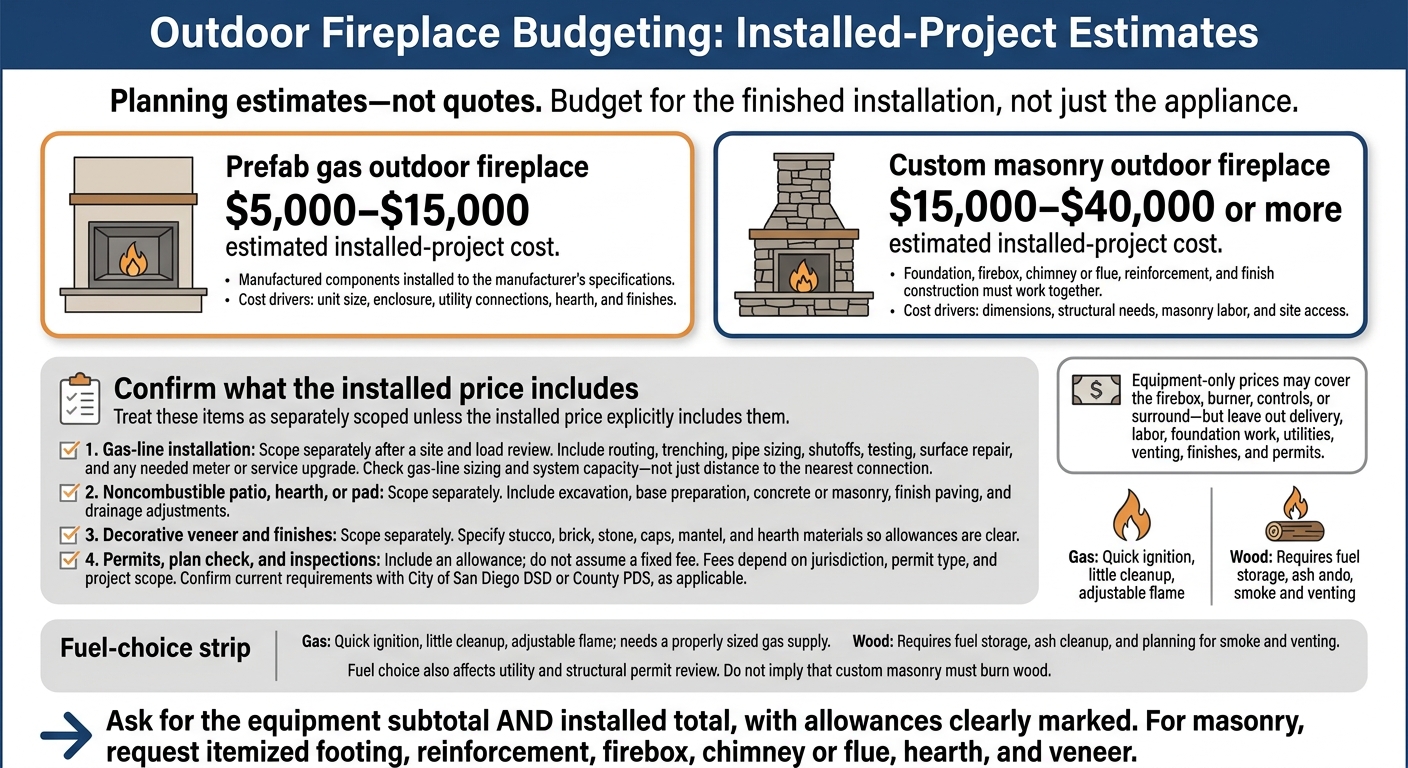
San Diego Outdoor Fireplace Costs: Prefab vs. Masonry
Budget for the finished installation, not just the appliance. Equipment-only prices may cover the firebox, burner, controls, or surround - but leave out delivery, labor, foundation work, utilities, venting, finishes, and permits.
The figures below are planning estimates, not quotes. Installed totals typically increase as foundation, chimney, veneer, and utility work are added.
Prefab Gas vs. Custom Masonry Costs
| Build type | Estimated installed-project cost | Construction scope and cost drivers |
|---|---|---|
| Prefab gas outdoor fireplace | $5,000–$15,000 | Manufactured components installed to the manufacturer’s specifications. Unit size, enclosure, utility connections, hearth, and finishes affect the total. |
| Custom masonry outdoor fireplace | $15,000–$40,000 or more | Foundation, firebox, chimney or flue, reinforcement, and finish construction must work together. Dimensions, structural needs, masonry labor, and site access affect the total. |
Utility, Hearth, Finish, and Permit Costs
Treat these items as separately scoped unless the installed price explicitly includes them. Before choosing a gas unit, ask the contractor to check gas-line sizing and system capacity - not just the distance to the nearest connection. This is especially critical if you are also planning an outdoor kitchen that shares the same utility lines.
| Budget item | How to account for it |
|---|---|
| Gas-line installation | Scope separately after a site and load review. Include routing, trenching, pipe sizing, shutoffs, testing, surface repair, and any needed meter or service upgrade. |
| Noncombustible patio, hearth, or pad | Scope separately. Include excavation, base preparation, concrete or masonry, finish paving, and drainage adjustments. |
| Decorative veneer and finishes | Scope separately. Specify stucco, brick, stone, caps, mantel, and hearth materials so finish allowances are clear. |
| Permits, plan check, and inspections | Include an allowance; don’t assume a fixed fee. Fees depend on jurisdiction, permit type, and project scope. Confirm current requirements with City of San Diego DSD or County PDS. |
Ask for both the equipment subtotal and installed total, with allowances clearly marked. For masonry, have the contractor itemize the footing, reinforcement, firebox, chimney or flue, hearth, and veneer. That helps you spot whether a lower bid means a simpler design - or missing work.
Gas vs. Wood
A gas outdoor fireplace offers quick ignition, little cleanup, and an adjustable flame, but it needs a properly sized gas supply. A wood-burning outdoor fireplace requires fuel storage, ash cleanup, and planning for smoke and venting. Compare those tradeoffs in the gas-versus-wood planning guide. Your fuel choice also affects the permit package, especially utility and structural review.
sbb-itb-2b3b7d5
Outdoor Fireplace Permits and Structural Review
Confirm permit requirements before buying. Contact the City of San Diego Development Services Department (DSD), County Planning & Development Services (PDS) for unincorporated properties, or your incorporated city’s building department. Provide the address, fireplace model, fuel type, and proposed location.
City guidance says masonry fireplaces and wood-burning prefabricated fireplaces require a building or combination permit. Some gas fireplaces may also need plumbing or electrical permits, depending on the installation. These requirements determine whether you can use a simpler permit process or need full structural review.
Building, Gas Line, and Electrical Requirements
Have a licensed installer document the gas route, pipe sizing, accessible shutoff valve, and any required pressure testing. Ask whether the work qualifies for a permit without full plan review or requires submitted plans. Electronic ignition, controls, lighting, or outlets may also require a separate electrical permit.
A freestanding unit must still follow its listing and manufacturer instructions. For masonry builds, the structural package is the main focus of permit review.
Before submitting, check setbacks, easements, and possible conflicts with underground utilities, irrigation, or drainage. Show nearby walls, eaves, and pergolas on the site plan. HOA approval and government permits are separate requirements - a permit does not replace HOA approval.
Foundation, Chimney, and Permit Plan Checklist
A custom masonry fireplace needs structural review, not just appliance specs. Review may cover the foundation, reinforcement, firebox, hearth, chimney, and any connection to an existing structure. The fireplace’s weight, height, wind exposure, and chimney can affect the design. Ask whether you need a structural professional, especially near retaining walls, on slopes, or where the fireplace attaches to another structure.
Submit the permit package as one complete set. Include:
- A scaled site plan, fireplace dimensions, and fuel type
- Manufacturer specs and listing
- Gas routing and electrical details
- Foundation and reinforcement details
- Chimney or venting requirements
Put responsibility for plans, submissions, corrections, inspections, and final approval in writing. Confirm inspection stages before construction so required foundation, gas, electrical, or fireplace work remains accessible for inspection.
Outdoor Fireplace Placement and Fire Safety
Once the permit-reviewed layout is set, check the site for comfort and fire safety. Placement must meet the manufacturer’s listing, adopted code, and local permit requirements. A hardscape base does not cancel required clearances to combustible materials.
Clearances From the House, Eaves, and Pergolas
Check rooflines, eaves, windows, doors, vents, combustible siding, and nearby fences. Don’t assume a fireplace can go beneath a pergola. Its posts, beams, roofing, and shade fabrics must meet the appliance listing and venting requirements.
Before construction, confirm these details:
- Overhead materials: Eaves, pergola parts, and fabrics meet the applicable requirements.
- Hearth: The surface is rated for the unit, properly supported, and drained.
- Seating and exits: Furniture gets useful radiant heat without blocking doors, gates, or walkways.
- Access: Gas meters, shutoffs, service equipment, and construction routes stay accessible.
- Approved location: The installation matches the permit plan.
Wind Direction and Santa Ana Red Flag Days
Watch evening breezes and wind corridors beside walls. Wind can push heat and smoke toward seating, windows, or neighboring properties. Wood-burning units also release sparks and embers.
Santa Ana winds and Red Flag conditions increase ignition risk. Don’t use the fireplace when wind makes flame control or ember containment unreliable.
Zone 0 Rules and Noncombustible Materials
California’s Board of Forestry approved the state Zone 0 rules on August 19, 2026, but they are not yet in effect statewide. Zone 0 is an ember-resistant zone around a structure - not a fireplace clearance rule.
The City of San Diego has applied Zone 0 to new structures in Very High Fire Hazard Severity Zones since February 28, 2026. See the City’s Zone 0 guidelines.
Concrete, pavers, gravel, and bare soil can help reduce combustible fuel near the structure. Vegetation, mulch, firewood, debris, fencing, and gates remain subject to restrictions.
Ask the reviewing official how these requirements apply to your fireplace, patio, and pergola. Prepare with this San Diego Zone 0 planning guide, then use the material rules to finish the patio, pergola, and planting layout around the fireplace.
Conclusion: Fit the Fireplace Into Your Backyard Plan
Before you approve an outdoor fireplace, confirm the build type, fuel, budget, permits, and placement as one plan. Match the design to your site, utility access, wind exposure, and local fire rules.
State Zone 0 rules aren’t in effect statewide yet. The California Board of Forestry approved the Zone 0 regulations on August 19, 2026. In the City of San Diego, Zone 0 already applies to new structures in Very High Fire Hazard Severity Zones. Keep turf, cushions, firewood, mulch, and other combustibles out of any area the appliance instructions or local fire rules prohibit.
Plan the fireplace with the patio, seating, outdoor kitchen, lighting, and drainage around it, using these fire feature and outdoor kitchen layout tips.
United Turf & Pavers handles fireplace and fire pit installation in San Diego, with the layout, scope, permit responsibility, and pricing confirmed in a site review before work starts. Timing depends on site conditions, permitting, utility coordination, and materials, so don’t build your schedule around a holiday deadline.
When the fireplace is part of a larger yard project, United Turf & Pavers’ backyard remodeling services cover the patio, seating, kitchen, and drainage in the same scope.
FAQs
Can I add an outdoor fireplace to my existing patio?
Yes - if your property meets clearance, zoning, and permit requirements. Check your HOA rules first, since they may be stricter than city requirements.
Confirm your fire zone classification, too. Very High Fire Hazard Severity Zones have stricter rules for fuel types and fireplace placement.
The fireplace must sit on a noncombustible surface, such as pavers or concrete. Confirm the rules for your site with City of San Diego Development Services or County Planning & Development Services.
How much heat will an outdoor fireplace provide?
An outdoor fireplace in San Diego warms nearby seating - not the whole yard. In windy conditions, it provides more focused warmth than an open fire pit.
Heat output depends on the fuel and fireplace design. Gas usually provides steady, easy-to-control heat, making it the best choice for reliable evening warmth on most properties, within local rules. Wood heat varies and comes with more restrictions.
What maintenance does an outdoor fireplace need?
Maintenance needs depend on the fuel type. Gas fireplaces require little upkeep - typically an annual check of the burner and valves. If you’re within 5 miles of the coast, marine-grade 316 stainless steel burners and hardware are recommended to help prevent salt-air corrosion.
Wood-burning fireplaces take more work. You’ll need to clean out ash regularly, keep the spark arrestor screen in good condition, and manage firewood storage.