.webp)
.webp)

How Long Artificial Turf Lasts in San Diego
September 6, 2026
Most artificial turf in San Diego lasts about 10 to 20 years, and some higher-end lawns can last 20+ years if the base, drainage, and upkeep are done right. Your turf will usually wear out sooner if it gets strong sun, heavy foot traffic, daily pet use, poor drainage, or weak cleaning habits.
You can size up turf life with a few simple checks:
- Light-use areas may last 20+ years
- Busy backyards often wear down sooner
- Pet runs and play zones usually wear the fastest
- Puddles that sit for 48–72 hours often point to a base or drainage problem
- Turf near the 20-year mark with matting, odor, or soft spots may be near the end of its useful life
San Diego weather and soil matter too. The area gets about 266 sunny days per year, which means steady UV exposure. Coastal sandy soil often drains faster, while inland clay soil can hold water much longer after rain.
If you want the short answer, it comes down to this: your turf lasts longer when you choose the right turf for your yard, the drainage moves water out fast, and high-use areas get cleaned and brushed on a regular basis.
| Area or Issue | What to Expect |
|---|---|
| Typical lifespan | 10–20 years |
| Best-case lifespan | 20+ years |
| Fastest wear | Pet areas, play zones, heavy-traffic paths |
| Main risk factors | Sun, traffic, pets, drainage, poor base prep |
| Repair signs | Small seam issues, one low spot, one problem corner |
| Replace signs | Matting across the lawn, repeat seam failure, long-lasting odor, drainage trouble |
The rest of the article breaks down what shortens turf life, when repair still makes sense, and how you can help your lawn last longer.
How to Make Artificial Turf Last 15+ Years
sbb-itb-2b3b7d5
What Affects Turf Lifespan Most
Three things tend to shape how long turf lasts: installation quality, day-to-day use, and upkeep.
Installation Quality and Base Preparation
What sits under the turf does a lot of the heavy lifting. A proper install starts with excavating 3–4 inches, compacting a crushed-rock base, and adding a weed barrier. If one of those steps gets skipped or rushed, problems can show up early: ripples, low spots, shifting, and seam separation can all happen before the fibers even start to wear down.
Grading matters too. A 2–5% slope helps move water away from the house and toward the street or a drainage outlet. That may sound like a small detail, but it makes a big difference. On clay-heavy inland lots, getting the grade right during installation helps stop water from pooling later.
Sun Exposure, Foot Traffic, and Pets
Sun takes a toll over time. Strong UV exposure fades fibers. In yards with a lot of direct sun, heat-reduction turf stays cooler and tends to hold up better.
Use patterns matter just as much. Foot traffic mats fibers down along walkways, play zones, and other repeat-use areas. Dogs can wear turf out even faster in those same spots, and urine may add odor and hygiene problems.
Drainage and Cleaning Habits
Even well-made turf wears out sooner when water and debris get stuck in the system.
When debris builds up, it can clog the backing and block drainage. In shaded areas, that trapped moisture can lead to mold or mildew.
Pet turf needs even more attention. Without rinsing, urine leaves moisture and ammonia in the infill and fibers, which can lead to odor and earlier replacement. Rinsing high-use pet zones often - and using an antimicrobial infill - helps prevent most of these problems.
When Turf Needs Repair or Replacement
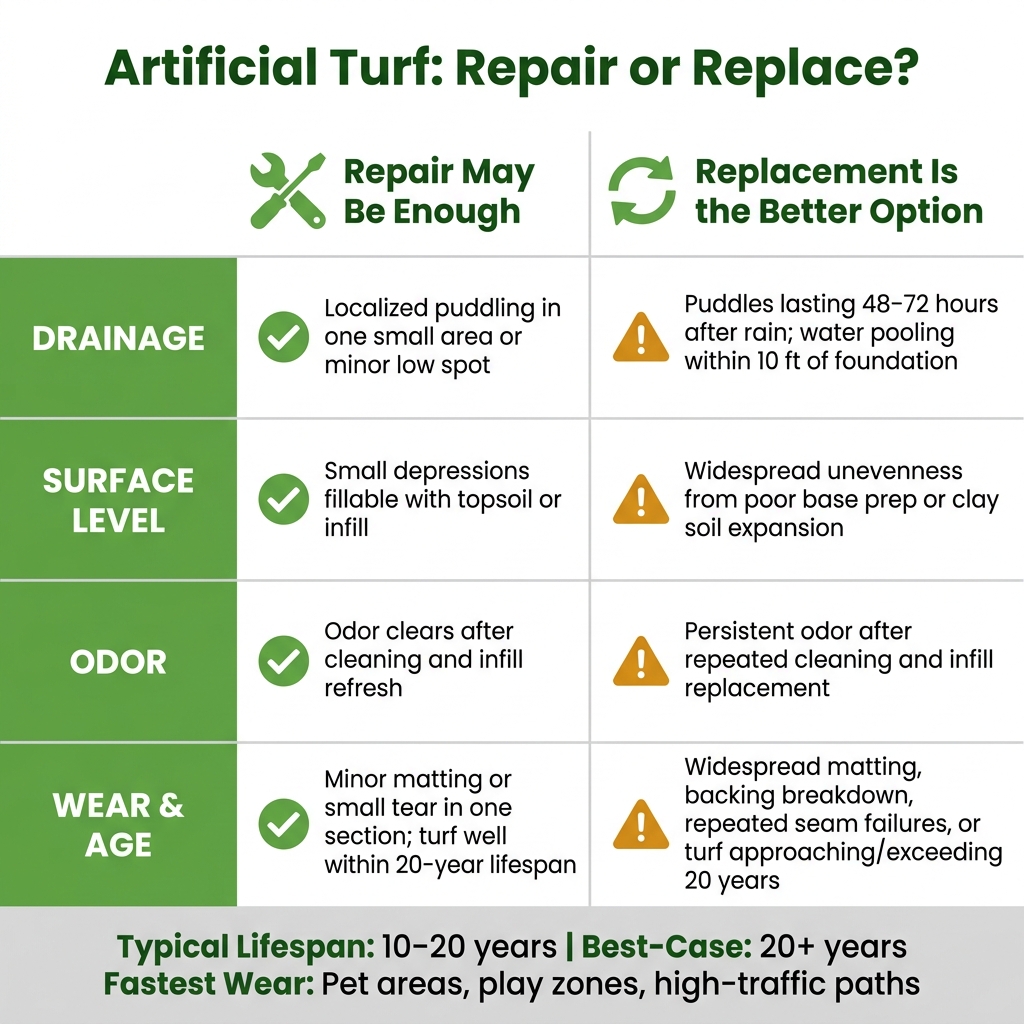
Artificial Turf Repair vs. Replacement: When to Fix and When to Replace
Not every turf problem means you need to rip everything out and start from scratch. A lot depends on whether the damage is limited to one area or points to a deeper system issue.
Signs a Repair May Be Enough
Small, local problems can often be fixed without touching the rest of the lawn. That includes things like a loose seam in one spot, a slight edge pull, or a small low area. If water only pools in one corner, that can often be corrected with a focused repair instead of a full replacement.
Signs Replacement Is the Better Option
Broad problems are a different deal. If matting shows up across most of the lawn, the backing is starting to fail, or seams keep pulling apart in several areas, patching usually stops making financial sense. The same goes for odor that sticks around even after cleaning and infill replacement. At that point, the turf system may simply be worn out.
Drainage failure is one of the clearest warning signs. If puddles stick around for 48–72 hours after a storm, the issue is likely in the base, not just on the surface. And if water is pooling within 10 feet of the home's foundation, the fix usually calls for a full drainage and base overhaul.
Age matters too. Turf that is nearing or past 20 years of use, and also shows broad wear, uneven settling, or a soft, waterlogged feel, has likely reached the end of its practical life.
Repair vs. Replacement: A Quick Comparison
| Issue | Repair May Be Enough | Replacement Is the Better Option |
|---|---|---|
| Drainage | Localized puddling in one small area; minor low spot | Puddles lasting 48–72 hours; water pooling near foundation |
| Surface Level | Small depressions that can be filled with topsoil or infill | Widespread unevenness from poor base prep or clay soil expansion |
| Odor | Odor that clears after cleaning | Persistent odor after repeated cleaning |
| Wear & Tear | Minor matting or a small tear in one section | Widespread matting, backing breakdown, or repeated seam failures |
| Age | Turf is well within its expected 20-year lifespan | Turf is approaching or exceeding 20 years of use |
If the turf is still repairable, the next move is routine care that helps slow wear and put off replacement.
How to Help Artificial Turf Last Longer
If your turf is still in solid shape, a few simple habits can slow wear and help you put off replacement.
Routine Upkeep That Prevents Early Wear
Pay a little extra attention to spots that get the most foot traffic. Brush those areas now and then to keep the blades standing up and cut down on matting. It also helps to clear leaves and other debris before they clog drainage. A blower or stiff broom usually does the job.
Rinse pet areas often to help control odors and keep the surface sanitary.
Keeping Drainage and Surface Performance in Good Shape
Surface care helps, but drainage is the bigger issue. Keep French drains and catch basins clear so water doesn’t back up under the base. If rainwater starts lingering longer than usual, don’t brush it off. That can be an early sign of trouble below the surface, and it’s better to check it before it turns into a base problem.
Matching the Right Turf to How the Yard Is Used
One of the best ways to get more life out of turf is to pick the right type from the start. Pet turf uses specialized infill made for odor control and sanitation. Play turf adds extra cushioning and durability for repeated impact. Putting greens use a tighter, firmer pile that can handle steady foot traffic in a small area.
Match the turf to how the yard is used, and it’s much more likely to hold up well over time.
What San Diego Homeowners Should Take Away
In San Diego, how long turf lasts comes down to a few simple things: install quality, sun, foot traffic, pets, drainage, and cleaning. The big one is fit. The base, drainage, and turf type need to match how the yard is used.
Installation sets the stage. After that, daily wear does the rest. A sunny yard, heavy traffic, pet use, and poor drainage can wear turf down a lot sooner. On the flip side, high-quality turf installed the right way can last up to 20 years. But if the base prep is sloppy or drainage gets ignored, that lifespan can drop fast.
San Diego soil also plays a big part in how well the base and drainage work. Get those details wrong, and you'll usually see wear spots and drainage issues much sooner. Put plainly: local soil and drainage conditions matter.
For new installs or replacements, United Turf & Pavers handles turf installation and full backyard remodels across San Diego. The process starts with proper drainage, then moves to turf selection.
FAQs
How can I tell if my turf is wearing out too soon?
Signs of premature wear include:
- noticeable matting or flattening of the blades
- thinning or shedding fibers
- exposed backing or lifting seams
- ongoing drainage problems
These issues can point to problems with the backing, base, installation, or maintenance.
Does San Diego sun damage artificial turf faster?
Yes, San Diego’s intense sun can wear down artificial turf over time. Regular UV exposure is one reason turf doesn’t last forever.
That said, your choice of turf makes a big difference. High-quality turf with heat-reduction technology can feel better underfoot, especially on hot days. And when you pair that with professional installation and premium materials, you give the turf a better shot at lasting longer and performing well year after year.
Can poor drainage ruin artificial turf?
Yes. Poor drainage can damage artificial turf. It can lead to puddles, uneven surfaces, a soaked base, and structural issues over time.
That’s why proper installation matters so much. If base prep misses key steps, like compacting crushed rock or setting a steady slope, the turf can wear out sooner than it should.