.webp)
.webp)

How to Choose a Pergola for Coastal vs. Inland Areas
June 28, 2026
Your location should decide your pergola before style does. In San Diego, coastal yards deal with salt, damp air, and wind, while inland yards deal with 95°F to 105°F+ heat, strong UV, and harsher afternoon sun.
If your home is near the coast, your safest pick is usually powder-coated aluminum with 316 marine-grade stainless steel hardware. If your home is inland, you should focus more on shade coverage, UV resistance, and heat control, with aluminum, cedar, or redwood based on how much upkeep you want.
Here’s the short answer:
- Coastal areas: pick corrosion-resistant materials and marine-grade hardware
- Inland areas: pick stronger shade and finishes that hold up under heavy sun
- Standard slat roofs: often block only 50% to 70% of direct sun
- Louvered roofs: can give much better sun control, especially for summer use
- Wood inland: needs repainting or restaining about every 2 to 3 years
- Near the ocean: standard metal fasteners can rust much faster if they are not marine grade
- WUI areas: aluminum may be the better choice near grills, fire pits, and outdoor kitchens
- Before building: check permits, HOA rules, wind loads, drainage, and electrical runs
What Is the Best Pergola Material for Any Climate?
sbb-itb-2b3b7d5
Quick Comparison
| Area | Main Weather Problem | Best Material Focus | Roof/Shade Focus | Main Risk if You Choose Wrong |
|---|---|---|---|---|
| Coastal San Diego | Salt, moisture, wind | Powder-coated aluminum, 316 stainless hardware | Open slat or louvered | Rust, pitting, peeling finishes |
| Inland San Diego | Heat, UV, afternoon sun | Aluminum, cedar, or redwood | Tighter slats, louvered, or solid-style shade | Too much heat, faded finish, cracked wood |
Your best pergola match comes down to three things: what your yard faces each day, how much shade you want, and how much maintenance you can handle. The rest of the article breaks those choices down in plain terms so you can pick the right setup for your property.
What Coastal and Inland Weather Does to Pergola Materials
Coastal salt and inland sun wear down pergolas in very different ways. That’s why picking a material isn’t just about looks. It’s about how that pergola will hold up in your part of San Diego.
Coastal San Diego: Salt, Moisture, and Wind
Near the coast, salt is the big problem. It slowly eats away at fasteners, finishes, and wood.
Salt air can break down standard coatings, rust hardware, and even pit stainless steel if it isn’t marine grade. Standard galvanized screws can rust out in about 2 years. Standard powder coatings can also bubble and peel when they face constant salt exposure. For hardware, 316L marine-grade stainless steel holds up much better near the ocean than standard 304 or 400-series options because it contains molybdenum.
Wood has its own issues by the coast. Without steady upkeep, it swells, rots, and loses strength faster in damp, salty air. Wind matters too. Coastal footings often need deeper reinforcement to deal with higher wind exposure.
Inland San Diego: Heat, UV, and Shade Needs
Inland areas don’t deal with salt the same way, but the sun is much harsher. That shifts the focus from rust control to heat and UV protection.
From June through September, temperatures often hit 95°F to 105°F+. Under that kind of sun, standard polyester powder coatings may give UV resistance for only 1 to 3 years. Wood can get hot to the touch. And if you don’t repaint or restain it every 2 to 3 years, it can dry out, crack, and turn gray. Aluminum stays cooler because it reflects more sunlight.
Shade is another place where people often misjudge what they need inland. A standard slatted roof blocks only 50% to 70% of direct sun. For midday summer use, that often isn’t enough. In foothill WUI zones, wood can bring another issue: it may conflict with fire-hardening rules near grills, fire pits, and outdoor kitchens.
Put simply, these weather patterns shape the right call on material, roof style, and shade coverage. They also make it much easier to see which pergola options fit each setting.
Pergola Materials and Designs for Coastal vs. Inland Yards
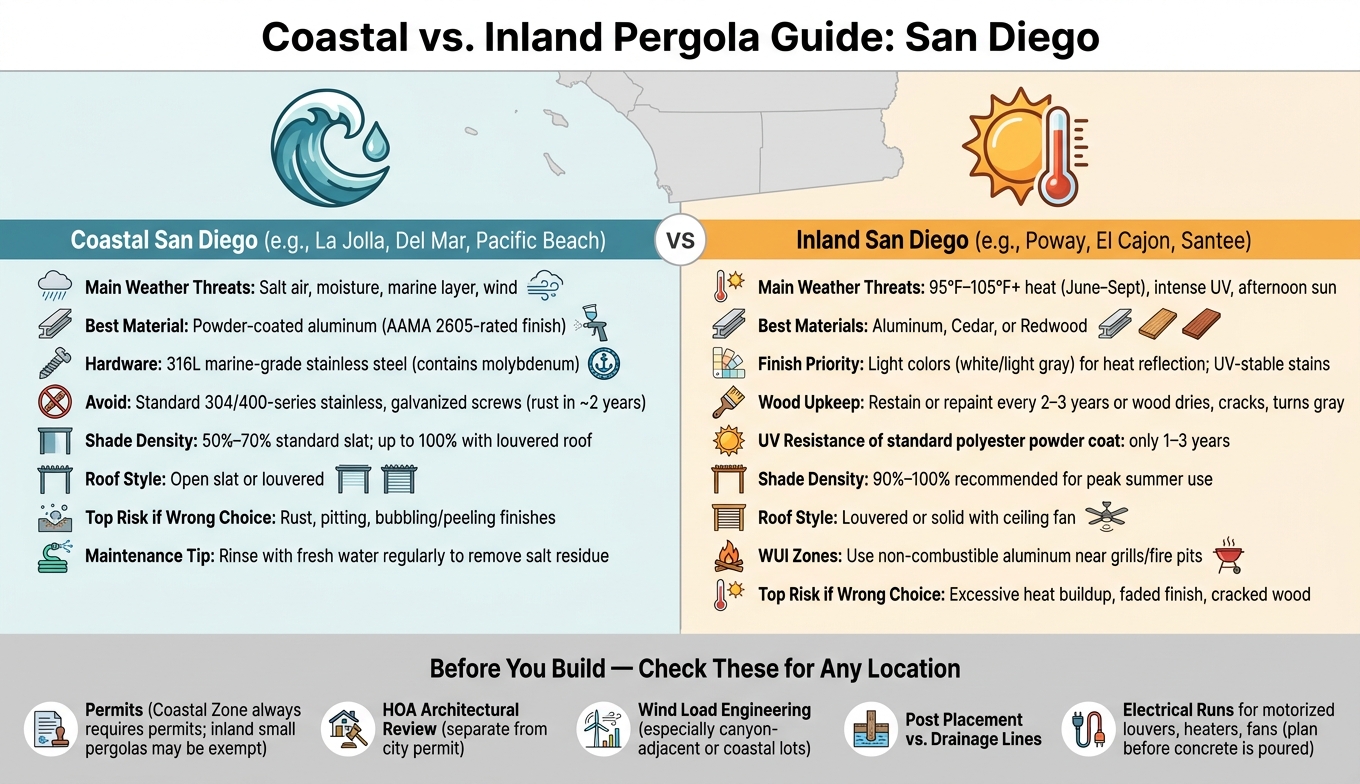
Coastal vs. Inland Pergola: San Diego Climate Guide
Knowing how weather affects materials is only part of the story. You also need to know which materials and designs hold up over time - and which ones make the yard pleasant to use on a normal day. The best setup depends on both your climate and how you want to use the space.
Coastal Pergolas: Aluminum, Protected Wood, and Corrosion-Resistant Hardware
For coastal neighborhoods like La Jolla, Del Mar, and Pacific Beach, powder-coated aluminum is the best match. It stands up to salt air and marine layer conditions without warping, cracking, or corroding the way other materials can.
If the pergola is close to the water, ask for AAMA 2605-rated powder coat on aluminum structures. Standard coatings can bubble and peel when they face constant salt exposure. A simple habit helps too: rinse the structure with fresh water on a regular basis so salt residue doesn’t sit on the finish and wear it down.
Hardware matters just as much as the frame. Every fastener, bracket, and connector should be 316 marine-grade stainless steel. Standard 304 or 400-series stainless can pit and oxidize within a few miles of the ocean.
Inland Pergolas: UV-Stable Materials and Heat Control
In inland areas, Cedar and Redwood are solid picks if you want a natural look that’s easier to live with. The catch is upkeep. Plan to restain or repaint every 2 to 3 years, or the wood can dry out and turn gray.
Aluminum also works well inland, especially if you want less maintenance. It stays cooler than wood in direct sun because it reflects heat instead of soaking it in. Color choice makes a difference too. Whites and light grays reflect solar radiation better than darker finishes.
Shade is a bigger deal inland than many homeowners expect. A standard slatted roof blocks only 50% to 70% of direct sun. That may feel fine in the morning, but it can fall short during peak afternoon heat. If you want the pergola to stay usable in summer, go with tighter slats or a louvered roof. In WUI zones and over grills or fire pits, use non-combustible aluminum .
Coastal vs. Inland Pergola Priorities: Side-by-Side Comparison
Here’s the fastest way to compare the two climates.
| Feature | Coastal San Diego (e.g., La Jolla, Del Mar) | Inland San Diego (e.g., Poway, El Cajon) |
|---|---|---|
| Ideal Materials | Powder-coated aluminum | Cedar, Redwood, or aluminum |
| Finish Priority | AAMA 2605-rated powder coat | Light colors for heat reflection; UV-stable stains |
| Shade Density | 50% to 70% standard; up to 100% with louvers | 90% to 100% recommended for peak summer use |
| Roof Style | Open slat or louvered | Louvered or solid with ceiling fan |
The main difference is simple: coastal builds need materials and hardware that can handle salt, while inland builds need stronger sun protection. A coastal pergola built with the wrong hardware can start showing rust and pitting over time. An inland pergola without enough shade can become uncomfortably hot by mid- to late afternoon . Those two factors alone can narrow your choice pretty fast.
How to Choose the Right Pergola for Your Property
Step 1: Identify Your Home's Microclimate
Use the climate comparison above to narrow down the right pergola type for your yard.
Start with the conditions on your property: coastal air, inland heat, or a transition zone somewhere in between. If you're between the coast and inland valleys, judge the space by exposure, not ZIP code. For example, a west-facing yard with strong afternoon sun and an ocean breeze may call for coastal-grade hardware even if it's several miles from the water. On the flip side, a yard that gets harsh midday sun needs inland-style shade, no matter what the mailing address says.
If your property sits in a WUI zone, check fire-hardening rules before you choose wood.
Once you know what kind of site you're working with, you can match the pergola to the way you plan to use the space.
Step 2: Match Materials, Roof Style, and Shade Coverage to How You Use the Space
Match the pergola setup to the job you want it to do. Use louvered roofs for dining and cooking zones, open slats for breezy lounge areas, and non-combustible aluminum near grills or fire features.
Upfront cost matters. But over time, maintenance and day-to-day comfort usually matter more.
After the design is set, place it within the full yard plan so the structure works with drainage, hardscape, and utilities.
Step 3: Plan the Pergola as Part of the Full Backyard Layout
A pergola should line up with the rest of the backyard layout. Where you place the posts affects drainage, paver patterns, and how people move through the yard. Post placement should be checked against existing drainage lines before any digging starts, because retrofitting around finished hardscape or cutting into a paver terrace adds cost and headaches.
It also helps to think through how the pergola connects to nearby surfaces. If the yard includes artificial turf, a patio, or a paver walkway, the pergola's footprint should line up with those elements so the layout feels planned instead of pieced together. Lighting and electrical runs, especially for motorized louvers or infrared heaters, need to be mapped out before concrete is poured. Adding a dedicated circuit later usually costs a lot more.
Coordinate pergola posts, drainage, hardscape, turf, and lighting in one layout before construction starts.
San Diego Build Factors and Final Takeaways
Anchoring, Permits, HOA Rules, and Wind or Load Requirements
After materials and shade, the next thing to check is code, setbacks, and site exposure.
Once you’ve picked a material and roof style, make sure the pergola can be built where you want it and how you want it. In San Diego, small pergolas may be permit-exempt in inland areas, but projects in the Coastal Zone still need permits, and WUI sites may call for non-combustible materials. If you’re adding motorized louvers, lighting, or fans, you may also need separate electrical or mechanical permits.
HOA approval is not the same as a building permit. Many communities, including Rancho Penasquitos, Eastlake, and 4S Ranch, require architectural review in addition to any city permit. That extra step can slow a project down if you miss it at the start.
Pergolas also need to meet local rules for load, height, and setbacks. On coastal lots or canyon-adjacent sites, you may need engineering to meet wind-speed requirements. That matters more than many homeowners expect. A pergola isn’t just a backyard feature. It has to stay put when strong winds roll through.
Using a licensed California contractor helps keep the project compliant and insured.
Conclusion: Match Your Pergola to Salt, Sun, and How You Use Your Yard
With the build requirements sorted out, the last step is matching the pergola to salt, sun, and the way you use your yard.
Near the coast, put corrosion resistance first. Inland, focus more on UV durability and shade control. Put simply: the best pergola is the one that fits your site conditions and how you plan to live in the space. Coastal areas call for better corrosion resistance. Inland areas need strong sun protection. And in both cases, you still need to check code and HOA rules.
If you’re not sure where to begin, United Turf & Pavers offers free design consultations and handles pergola installation as part of full backyard remodeling projects across 25+ San Diego neighborhoods.
FAQs
How do I know if my yard needs coastal-grade hardware?
If your home sits a few miles from the coast, put coastal-grade hardware at the top of your list. Salt air can eat through metal much faster than most people expect. That can lead to rust stains, weaker connections, and, in some cases, structural failure.
This matters even more in areas like Pacific Beach, Del Mar, and La Jolla. Ask your builder to use 316 marine-grade stainless steel fasteners and brackets rated for marine exposure.
Is a louvered pergola worth it for inland heat?
Yes. In inland areas where summer temperatures often hit 95°F to 105°F, a louvered pergola can work very well.
Here’s why: a standard slat pergola usually blocks only 50% to 70% of direct sun. A louvered pergola, on the other hand, can close all the way for full shade when the heat is at its worst.
That makes a big difference on hot afternoons when the sun feels relentless.
Many louvered pergolas are made from durable aluminum, which helps in two ways. First, aluminum doesn’t soak up and throw off heat the way some other materials can. Second, the adjustable louvers let you control airflow based on the weather. You can close them for shade, then tilt them open to let hot air move out and a breeze move through.
What upkeep should I expect for wood vs. aluminum?
Wood pergolas need steady upkeep. In most cases, that means painting, staining, or sealing them every two to three years to help guard against drying, cracking, warping, and rot. Skip that work, and the cost of repairs and upkeep can climb into the thousands of dollars over a 10-year period.
Aluminum is low-maintenance. It usually just needs the occasional rinse to wash away debris or salt residue. And unlike wood, it won’t rot, warp, or attract termites.