.webp)
.webp)

Fire Pit vs. Fire Table: Which Fits Your San Diego Yard?
August 12, 2026
If your yard is large and you want more heat, a fire pit is usually the better pick. If your patio is small and you want a flame plus table space, a fire table often fits better.
Your choice mostly comes down to 6 things:
- Patio size
- Heat output
- Fuel type
- Wind exposure
- Seating layout
- Budget
Here’s the short answer:
- Fire pits give off more heat, often around 90,000 to 125,000 BTUs, and work best in larger yards with room for a full seating circle.
- Fire tables usually range from 50,000 to 70,000 BTUs, take up less space, and work well on compact patios where guests need a spot for drinks and plates.
- Gas models are easier to use day to day than wood-burning options because they light fast and don’t leave ash behind.
- Coastal yards often do better with gas and a wind guard because sea breezes can push smoke and embers from wood fires.
- Portable propane units can start as low as $150 to $800, while built-in gas setups can run from $1,500 to $8,000+. Some gas-line installs in San Diego may also need permits that can add $300 to $1,200.
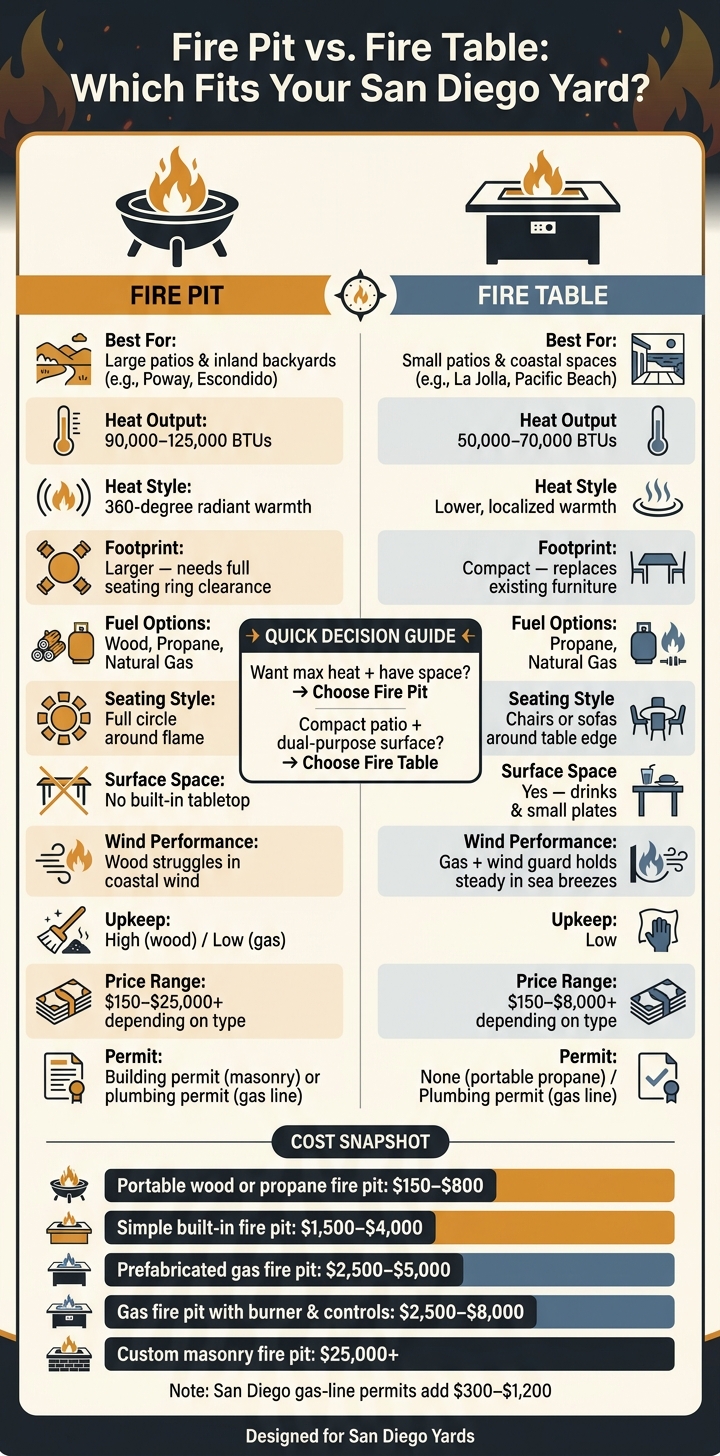
Fire Pit vs. Fire Table: San Diego Backyard Comparison
Fire Table vs Fire Pit
sbb-itb-2b3b7d5
Quick Comparison
| Criteria | Fire Pit | Fire Table |
|---|---|---|
| Best for | Large patios and inland backyards | Small patios and coastal spaces |
| Heat | Higher, all-around warmth | Lower, closer warmth |
| Typical BTUs | 90,000–125,000 | 50,000–70,000 |
| Footprint | Needs more clearance | Uses less space |
| Seating style | Full circle around flame | Chairs or sofas around table |
| Fuel options | Wood, propane, natural gas | Propane, natural gas |
| Wind performance | Wood can be harder in wind | Gas with wind guard tends to hold steadier |
| Upkeep | More work with wood; less with gas | Low upkeep |
| Surface space | No built-in tabletop | Yes - space for drinks and small plates |
| Price range | $150 to $25,000+ depending on type | Often lower to start for portable propane models |
In plain terms, a fire pit suits bigger group hangouts and colder inland evenings, while a fire table suits smaller patios and low-fuss hosting. The rest of this guide breaks down where each one works best in San Diego yards.
Fire Pit vs. Fire Table: Side-by-Side Overview
| Feature | Fire Pit | Fire Table |
|---|---|---|
| Height | Low (12–18 inches for built-in) | Standard table height (24–30 inches) |
| Common Fuel Types | Wood, natural gas, propane | Propane, natural gas |
| Best When | You want maximum warmth and have room for a seating ring | You need a dual-purpose surface on a compact patio |
| Seating Style | Circular lounge, built-in benches | Patio dining chairs, bistro or sofa sets |
| Heat Feel | 360-degree radiant warmth | Lower, localized heat |
| Maintenance | High (wood); low (gas) | Low |
| Best Yard Fit | Larger patios, open inland yards | Smaller coastal patios, modern lounge spaces |
Space, Seating, and Day-to-Day Use
Fire pits need more room around them. Since people usually gather in a full ring, they tend to work better on larger patios where you can give seating enough space without making the layout feel cramped.
Fire tables keep everything tighter. On a compact coastal patio, that space difference stands out fast. You still get the flame, but you don’t give up as much of the patio to make it work.
There’s also a practical side to a fire table. When the flame is off, it still works like outdoor furniture, with space for drinks or small plates around the center burner. That mix of fire feature and tabletop use makes sense when every square foot matters. A fire pit doesn’t give you that same built-in surface.
Heat Output, Fuel Type, and Wind Performance
Built-in gas fire pits usually put out 90,000 to 125,000 BTUs, which gives you stronger 360-degree radiant heat. Fire tables usually land around 50,000 to 70,000 BTUs, and the warmth stays closer to the seating area.
That gap matters. For inland yards in places like Escondido or Poway, a fire pit’s higher output is often the better fit for cooler evenings.
Wind changes the equation too. On breezy coastal patios, gas fire features tend to hold their flame better than wood-burning fire pits. With wood, wind can shove smoke and embers off course. A gas setup with a glass wind guard does a better job of keeping the flame steady in sea breezes.
In plain terms: yard size, seating layout, and fuel access all shape which option makes more sense.
Safety, Maintenance, and Cost
Gas-powered versions of both options are easier to live with day to day. They offer instant ignition and don’t leave behind ash, so cleanup is much lighter than when you compare gas vs. wood fire pits.
A fire table also puts a bit more space between the flame and your guests because the table surface creates separation. That may sound like a small detail, but around food, drinks, and moving chairs, it can matter.
Wood-burning fire pits ask for the most upkeep. They can also be harder to use when burn restrictions are in place during "Spare the Air" days or in high-fire-risk zones.
Cost depends on how permanent the setup is, what fuel it uses, and whether you add controls.
| Option | Typical Price Range (USD) |
|---|---|
| Portable wood or propane fire pit | $150–$800 |
| Simple built-in fire pit | $1,500–$4,000 |
| Prefabricated gas fire pit | $2,500–$5,000 |
| Gas fire pit with burner and controls | $2,500–$8,000 |
| Custom masonry fire pit | $25,000+ |
If you’re planning a permanent natural gas install, you may need a permit. In San Diego, permit costs usually run from $300 to $1,200, depending on the scope of the gas and electrical work. Portable propane setups skip gas-line permit costs.
That’s often the point where the choice gets clearer: more heat and a bigger footprint, or a tighter setup that also works like a table.
When a Fire Pit Is the Better Choice for Your San Diego Yard
Choose a fire pit when you have enough room for a seating ring and want stronger, all-around warmth. In a yard that can handle a true seating circle, a fire pit is often the better pick. Its 360-degree heat pairs best with circular seating, so it fits larger, more social layouts.
Why Fire Pits Work Well on Larger Patios
Mid-sized to larger backyards - common in inland areas like Santee, Poway, and Escondido - give you the space to set up a fire pit the right way. In San Diego, clearance rules can make fire pits harder to place on small patios. That’s why they tend to work better in bigger outdoor spaces built for groups.
When space isn’t an issue, a built-in gas fire pit can anchor the whole backyard design. Pair it with a paver patio and seat walls, and it becomes a permanent focal point. In a full backyard remodel, built-in fire pits can also add lasting value.
Wood-Burning vs. Gas Fire Pits
The choice between wood and gas usually comes down to atmosphere or convenience.
| Feature | Wood-Burning Fire Pit | Gas Fire Pit |
|---|---|---|
| Ignition | Manual - build and tend the fire | Instant - switch or button |
| Cleanup | Ash removal and wood storage required | No cleanup needed |
| Burn Restrictions | Subject to AQMD no-burn alerts | Generally exempt from burn bans |
| Permit Needs | Masonry builds need a building permit | Plumbing permit for gas line |
Wood-burning fire pits offer something gas doesn’t quite copy: the smell, the sound, and the ritual of building a fire. That said, on no-burn alert days, you can’t use them. If you host often or want a fire feature that works on demand, a gas fire pit is the steadier option.
For coastal yards, use corrosion-resistant burners and finishes.
If your patio is smaller, or you want a built-in surface around the flame, a fire table usually fits better.
When a Fire Table Is the Better Choice for Your San Diego Yard
This tradeoff shows up most on compact patios. A fire table takes up less room and still gives you a usable surface. It’s a smart pick when you want a small fire feature that also works as a table.
Why Fire Tables Work Well on Smaller Coastal Patios
On tighter patios - think condo courtyards, ADU patios, or small coastal yards in places like La Jolla or Pacific Beach - every square foot counts. A fire table fits into these spaces well because it replaces a piece of furniture instead of adding another one. That matters on a small patio, where extra bulk can make the whole layout feel cramped.
There’s also a simple day-to-day perk: guests can set down drinks and small plates right on the surface. You don’t need the extra clearance that a fire pit usually calls for.
Fire tables save space by combining a flame and usable surface in one footprint.
On breezy coastal patios, use a wind guard. For coastal yards, choose corrosion-resistant burners.
That’s why fire tables make sense in yards where entertaining matters more than max heat output.
Propane vs. Natural Gas Fire Tables
Propane and natural gas can both work well, but they fit different needs. Here’s a clear breakdown of the main differences:
| Feature | Propane Fire Table | Natural Gas Fire Table |
|---|---|---|
| Portability | High - can be repositioned on the patio | Low - fixed to a permanent gas line |
| Permit Required | Generally none for portable units | Plumbing permit required for gas line |
| Fuel Supply | Manual tank refills or exchanges | Continuous supply from the home's main line |
| Installation | Immediate - no professional plumbing needed | Requires trenching and a licensed contractor |
| Best For | Flexible layouts, quick upgrades | Permanent luxury lounge areas |
Portable propane fire tables are the fastest option to add because they don’t need a gas line. Many models also hide the tank beneath the table surface, which helps the setup look clean and tidy.
"The permit isn't really about the fire feature itself, it's about making sure the gas line is sized, pressure tested, and installed safely before it gets buried or built over." - Earth View Landscape
Once you’ve narrowed down the fuel type, the next step is to match the feature to your yard size and budget.
How to Match the Right Fire Feature to Your Yard and Budget
Once you've narrowed down heat and fuel, the next call usually comes down to your yard layout and what you want to spend. In most cases, six things make the choice pretty clear: patio space, heat output, how you like to entertain, upkeep, wind, and budget. Put those together, and the field gets smaller fast.
Quick Guide for Common San Diego Yard Scenarios
Your yard setup often points to the best option without much guesswork. Here’s how common San Diego layouts usually line up:
| Yard Scenario | Best Fit | Why |
|---|---|---|
| Large inland backyard (e.g., Poway, Escondido) | Built-in gas fire pit | High heat output (90,000–125,000 BTU) for 6–8 people; permanent focal point for cooler inland nights |
| Compact coastal patio (e.g., Pacific Beach, La Jolla) | Propane fire table | Saves space; dual-purpose surface; portable propane models save space and install faster |
| Modern entertainment-focused patio | Fire table | Clean look, built-in surface, and easier conversation layout |
| Sloped lot | Fire pit with integrated seating wall | Handles grade changes while creating a natural gathering spot |
If your yard could go either way, budget is often the tiebreaker.
A portable propane fire table usually costs less to get up and running than a built-in gas fire pit. And if the project needs a new gas line, make room in the budget for permit costs too.
Planning Your Project with United Turf & Pavers
If you're still stuck between the two, it helps to plan the fire feature at the same time as the patio and utility work. In San Diego yards, that means thinking about paver layout, wind exposure, and drainage from day one. It also makes sense to run gas and electrical lines before the pavers go in, so you don't have to tear things up later.
United Turf & Pavers (CA License #1138157) offers backyard remodeling services that include paver patios, fire features, pergolas, retaining walls, drainage grading, and landscape lighting. They also offer free design consultations, which can be a simple first step if you're still weighing a fire pit against a fire table and want to see how each one fits your yard size and layout.
FAQs
How much patio space do I need?
It depends on the layout you want around the fire feature.
A basic patio usually needs 200–400 sq ft. If you want separate dining and entertaining areas, plan for 400–600 sq ft. That size often works well for built-in fire pits with seating.
For a larger outdoor living room setup, consider 600–1,000+ sq ft. You’ll also want enough space for comfortable seating and easy movement around the fire.
Which option is safer in windy areas?
In windy areas, a gas fire pit or propane fire table is usually a safer pick than a wood-burning fire pit. The reason is pretty simple: gas gives you more control. You can turn it on and off with a valve, and it doesn't send embers or smoke into the air where the wind can blow them toward nearby homes or neighbors.
If you go with a fire pit, use a safety screen and set it well away from flammable materials, especially in areas with a high fire risk.
Do I need a permit in San Diego?
It depends on your project and local rules. Portable, freestanding fire pits or fire tables that aren’t connected to utility lines usually do not need a permit.
Built-in features often do. Gas lines may call for a plumbing or mechanical permit. Electrical ignition or lighting may need an electrical permit. Permanent masonry or wood-burning fireplaces may also need a building permit.
Your safest move is to check with your local building department. If you live in a neighborhood with an HOA, check there too.